

You are already aware of the issue if you reside in an apartment.Horns at 6 a.m., a neighbour's TV, construction next door, children playing in the common area. Walls are rarely the weak point. Windows are. Choosing soundproof uPVC windows for apartments is one of the most effective upgrades for a quieter home, and it also helps with dust, drafts and cooling costs.
This guide explains how noise-reducing uPVC windows work, what specifications to look for, and the mistakes that waste money.
Why Apartments Are Hard to Keep Quiet
Apartments face noise from two directions: outside (traffic, construction, crowds) and inside the building (corridors, lifts, upstairs and neighbouring units). Older aluminium or timber windows often have thin single glass and gaps around the sash, and sound travels through any gap.
Noise is measured in decibels (dB). A reduction of about 10 dB is perceived as roughly half as loud, so even modest improvements in sound insulation are noticeable.
How uPVC Windows Reduce Noise
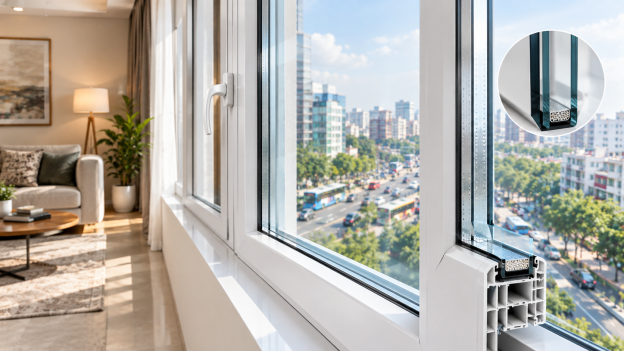
uPVC (unplasticised polyvinyl chloride) is a good base for acoustic performance for three reasons:
- Multi-chamber frames. Hollow internal chambers trap and slow sound vibrations instead of passing them through like a solid metal profile.
- Tight sealing. Quality uPVC sashes close against rubber gaskets, such as EPDM, that remove the air gaps sound slips through.
- Glass flexibility. The frame can hold thicker or specialised glazing that aluminium sections often can't support as easily.
That said, glass makes up most of the window's surface, so the glazing choice decides most of the result.
Features That Matter Most
| Feature | Why it helps | What to look for |
|---|---|---|
| Double-glazed units | Two panes with an air or gas gap reduce sound transmission | Unequal pane thickness (e.g., 6 mm + 4 mm) works better than identical panes |
| Laminated acoustic glass | A plastic (PVB) interlayer damps vibration, especially for voices and traffic | Ask for laminated glass on at least one pane |
| Wider air gap | A bigger cavity improves insulation, especially for lower-frequency noise | 12 to 20 mm gaps are common |
| Multi-chamber uPVC profile | Adds frame-level damping | 5-chamber or higher profiles |
| Quality gaskets and multi-point locks | Compress the sash evenly for an airtight seal | EPDM gaskets, multi-point locking hardware |
| Sound rating | Lets you compare products objectively | Request an Rw or STC rating from a lab test report |
If you're comparing soundproof uPVC windows for apartments from different brands, ask each for a tested sound reduction figure rather than relying on "soundproof" in the brochure. No window is fully soundproof. The accurate term is sound-reducing or acoustic.
What the numbers roughly mean
Exact results vary by product and installation, but as a general guide:
- Standard single glazing: lower sound insulation, often in the mid-20s dB range
- Basic double glazing: noticeably better
- Double glazing with laminated acoustic glass: the strongest option in typical residential uPVC windows
Casement vs. Sliding Windows
Many apartment buyers prefer sliding windows to save space, but the trade-off matters for noise.
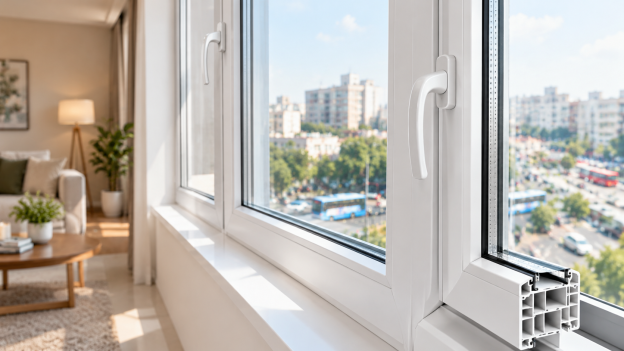
- Casement and tilt-and-turn windows press the sash tightly into the frame, giving a better seal and usually better acoustic performance.
- Sliding windows rely on brush seals along the track, which are less airtight. They can still perform reasonably well if the glazing is good, but expect less noise reduction than a casement of the same specification.
If your main concern is noise, choose casement or tilt-and-turn for the windows facing the loudest side.
Installation Quality Can Make or Break Performance
A premium window installed badly will leak sound. Watch for:
- Gaps between the frame and wall. These should be filled with proper sealant or acoustic foam, not left empty or stuffed with loose material.
- Uneven alignment. A sash that doesn't sit flush leaves leaks even with good gaskets.
- Skipped finishing. External sealant and internal trim help close residual gaps.
Ask whether the installer measures on-site and whether they are trained on the brand's system.
Mistakes to Avoid
- Buying on looks or price alone. A cheap double-glazed unit with thin identical panes may not beat a good single laminated pane.
- Ignoring the noise source. Low-frequency noise (heavy traffic, bass music) needs a wider cavity and thicker glass than high-pitched noise.
- Forgetting the rest of the opening. Vents, open trickle vents and air conditioner gaps reduce overall performance.
- Skipping building rules. Many apartment societies have rules about exterior changes. Check with your management committee before replacing windows.
Other Benefits Beyond Noise
The same features that cut sound often bring:
- Better thermal insulation, which helps keep rooms cooler in hot weather and reduces AC load
- Less dust and pollution entering the home
- Low maintenance: no painting, and uPVC resists rust and termites
- Improved security from multi-point locking
How to Choose: A Quick Checklist
- Identify your main noise source and which walls face it
- Prioritise laminated glass and a double-glazed unit for those windows
- Choose casement or tilt-and-turn where noise is the top concern
- Request a lab-tested sound rating from the supplier
- Ask for a site visit and a written warranty covering glass, hardware and installation
- Look at a finished installation, or a demonstration unit, before ordering
Conclusion
Quiet doesn't come from one magic feature. It comes from combining acoustic glazing, a well-built multi-chamber frame, good seals and careful installation. If traffic, neighbours or construction noise is wearing you down, soundproof uPVC windows for apartments are a practical, long-lasting fix that also improves comfort and energy efficiency. Get tested ratings, insist on proper installation, and match the window type to your noisiest wall.
Frequently Asked Questions
1. Are uPVC windows really good at blocking noise?
Yes, when specified properly. Multi-chamber frames, tight gaskets and double-glazed or laminated glass can reduce outside noise significantly compared with older single-glazed aluminium or timber windows.
2. What is the best glass for reducing noise in apartment windows?
Laminated glass in a double-glazed unit, ideally with panes of different thicknesses, performs best in most residential settings.
3. Do sliding uPVC windows block sound as well as casement windows?
Generally no. Casement and tilt-and-turn windows seal more tightly. Sliding windows can still help if fitted with good glazing, but they usually let in more noise.
4. Can I make my existing windows quieter without replacing them?
Partly. Replacing worn gaskets, sealing gaps and adding heavy curtains can help, and secondary glazing is an option. For major noise problems, replacement offers the largest improvement.
5. How much noise reduction should I expect?
It depends on the product and installation. Ask the supplier for a tested Rw or STC rating, and be cautious of claims of "100% soundproofing."
6. Are soundproof uPVC windows for apartments worth the cost?
If noise affects your sleep, work or comfort, they're usually worth it. You also gain energy savings, lower maintenance and better security, so the benefit extends beyond sound.
7. Do I need permission to replace windows in my apartment?
Often yes. Many housing societies regulate external changes, so check your by-laws or ask the management committee first.